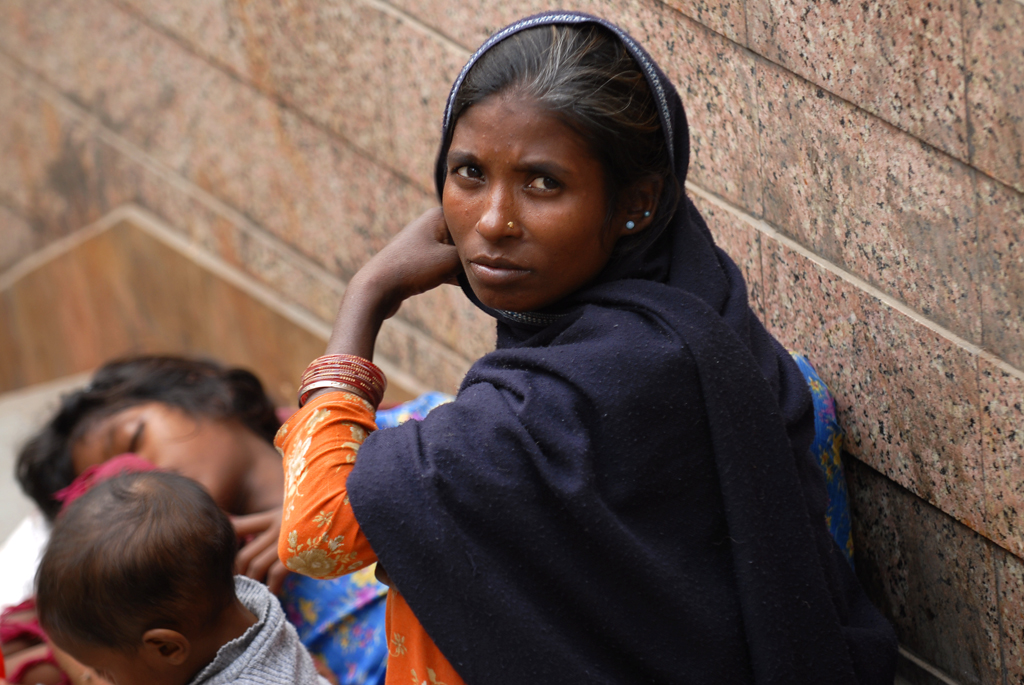
On the busy steps of a New Delhi metro station, a mother holds her child close – a moment of love and resilience amid the city's chaos. Her story is one of struggle and strength, captured in a single frame – a picture is worth a thousand words.
The saying 'A picture is worth a thousand words' refers to the notion that an idea that can be conveyed with just a single
still image. The photographer Kristian Bertel is telling that a single photograph can capture emotions, narratives and details that would take countless words to describe something that highlights the immense power of visual storytelling.
Photographs are speaking to the senses
Unlike text, which requires interpretation and reading time, an image delivers an immediate and universal message, transcending language barriers and cultural differences. Photography, in its essence, is a form of communication that speaks directly to the senses. A well-composed image can evoke deep emotions, from joy to sorrow, nostalgia to hope. Whether it is a portrait revealing the soul behind the eyes, a landscape conveying the vastness of nature or a street scene telling a thousand untold stories, photography allows viewers to connect with the world in an intimate yet powerful way. In documentary and journalistic photography, this phrase takes on an even greater meaning. A single image of a conflict, disaster or moment of human triumph can raise awareness and inspire action in ways that words alone often cannot.
However, the power of an image also lies in its interpretation. While a picture may speak volumes, its meaning can change depending on the viewer's perspective, experiences and emotions. This is what makes photography such a dynamic and profound art form – it allows for personal reflection and invites diverse stories to emerge from a single frame.
"In a city that never stops moving, a mother pauses – cradling her child on the cold steps of a metro stairway. In her weary eyes, there is struggle – in her embrace, there is love. The world rushes past, but in this moment, nothing matters more than the warmth of her arms. A picture speaks, not in words, but in the silent language of resilience and devotion"
The ability to capture a moment
In an era dominated by visual media, where photographs flood social platforms and news feeds, the saying remains as relevant as ever. A fascinating image can cut through the noise, grab attention and leave an indelible mark on the viewer's mind. Whether in photojournalism, advertising, or artistic expression, the ability to capture a moment that resonates with an audience proves the timeless truth behind this famous phrase.
In the heart of New Delhi, among the constant rush of commuters, a single photograph captures a moment that words could only attempt to describe. A poor woman sits on the cold concrete steps of a metro stairway, cradling her child in her arms. Her 'Sari' is worn and faded, her bare feet resting on the dusty pavement. The child, small and frail, clings to her, seeking warmth and security in her embrace.
Behind her, hurried footsteps echo as office workers, students and travelers pass by – some glancing momentarily, others too lost in their own world to notice. The metro station, a symbol of modern India's rapid progress, contrasts sharply with the raw struggle of survival unfolding at its edge.
A photo with a story
This single image tells a story of resilience, motherhood and social disparity. It speaks of love in the midst of hardship, of a mother's unwavering dedication despite the challenges she faces. It also raises silent questions – about inequality, about the unnoticed lives that exist in the periphery of urban progress. Ultimately, a picture does not replace words – it enhances them. It provides a depth of understanding that language alone may struggle to achieve. And sometimes, the most powerful moments are the ones that need no words at all.
"A thousand words could describe her sorrow, her strength, her reality. Yet, in this frozen moment, no words are necessary. The photograph itself carries the weight of human emotion, reminding us that sometimes, to truly see a story, all we need to do is look"
"- With this photograph of an Indian woman sitting on the stairs of a New Delhi metro station, cradling her child, I'm struck by the emotions of poverty and motherhood – universal themes that transcend circumstances. When photographing people and strangers as they truly are, I often find myself wondering about their lives. Is this their daily reality, living moment by moment on a stairway in India? Or have I simply captured them in a fleeting, momentary situation? It's a guessing game, but one that sparks thought and reflection", the Photographer says.
More about the picture from India
This image was taken at Connaught Place in Delhi, a historic structure from the British colonial era, now transformed into one of the city's most prominent marketplaces. Here, you can find everything – street vendors, boutique shops and factory outlets – all within its bustling circular layout. Connaught Place is a melting pot of people from around the world and all walks of life.
"- Despite modernization, with many old shopfronts replaced by glass and steel, a few remnants of its past remain hidden in the outer rings of the circuit. Walking through its crowded corridors, watching the endless flow of people and traffic, I couldn’t help but wonder to ask myself, where do all these people come from", the Photographer says again.
Learn more about Kristian Bertel | Photography on his website or on Kristian Bertel | Photography - Facebook.